FieldEyes Reviews may earn an affiliate commission when you buy through links on this page, at no extra cost to you. Read our full affiliate disclosure and review policy
Setting up game cameras along rub lines, feeder edges, or fence crossings is one of the most effective ways to understand animal movement without disturbing the lease. However, shopping for a scouting camera quickly exposes a confusing spread of advertised numbers: sensor megapixel counts reaching up to 50MP, promises of 4K video, integrated solar panels, and specialized night flash systems. In the field, practical performance comes down to reliable triggering, clean night illumination that does not spook game, and a power setup that does not die during cold snaps.
Every camera selected below has distinct stated hardware features and power designs. Before mounting a unit to a hardwood trunk, reviewing how these advertised specifications translate to field use—and asking the right verification questions—will prevent wasted trips out to the woods.
Key Field Decisions: Flash, Resolution, and Power
Before evaluating specific listings, consider the operational demands of your deployment site:
- Night Illumination (940nm vs. Low-Glow or White Flash): Cameras advertised with 940nm "black" infrared LEDs produce an invisible flash wavelength that neither wildlife nor trespassers can easily spot. Low-glow units (typically 850nm) emit a faint red visible glow at the array, while full white-light LEDs illuminate the target area with visible light, yielding full-color nighttime shots at the risk of startling game.
- Advertised Megapixels and Video Resolution: Extreme ratings such as 48MP or 50MP on marketplace trail cameras frequently rely on software interpolation from a lower-resolution native sensor. While interpolated files provide larger image dimensions, native optical clarity, lens quality, and sensor shutter speed dictate whether a moving buck is crisp or blurred.
- Power Supply Architecture: Traditional game cameras rely on sets of AA alkaline or lithium batteries. Units configured with dedicated rechargeable lithium packs or built-in solar panels can reduce recurring battery waste, provided the mounting location receives sufficient tree canopy sunlight and seasonal freezing temperatures do not lock up the chemical cells.
- Field Review Workflow: Unless using a live wireless transmission system, you must physically access the memory card. Carrying a multi-connector card reader allows you to check photos immediately on a smartphone while at the tree, avoiding the need to haul full cameras back to camp.
Featured Game Cameras and Deployment Profiles
BolyGuard SG520-Plus Trail Camera-4K/48MP Night Vision Wildlife Hunting Game Camera with 940nm Black IR&White LED, Solar Ready

Specs listed reflect seller claims. Sensor arcs, nighttime illumination, and battery longevity vary with weather, foliage, and mounting.
1. BolyGuard SG520-Plus (Advertised 4K / 48MP Dual-Flash)
The BolyGuard SG520-Plus listing emphasizes high-tier capture metrics, advertising 4K video capture and 48MP still images. A standout claim in its listing is the dual flash arrangement, advertising both 940nm black IR LEDs for covert night monitoring and white LEDs for visible illumination. It is also listed as "solar ready," suggesting compatibility with external solar charging gear.
- Best suited for: Scouting setups where covert surveillance is mandatory, with the option to switch to white light for detailed nighttime color capture.
- Field limitations: At an advertised price point of roughly $84.53, it represents a larger initial investment than entry-level trail traps. The solar-ready claim indicates external power potential, but whether the required solar panel and cable connector are bundled in your specific checkout option must be confirmed with the merchant.
- Verification check: Inquire with the seller whether the listing variant includes mounting straps, a solar panel accessory, or a memory card, and check the user manual for menu toggles between black IR and white LED flash.
20MP 1080P Night Vision Waterproof Wireless Hunting Camera Trail Cameras MiNi301 Photo Trap for Wildlife

Specs listed reflect seller claims. Sensor arcs, nighttime illumination, and battery longevity vary with weather, foliage, and mounting.
2. MiNi301 Compact Trail Trap (Advertised 20MP / 1080P)
The MiNi301 from Suntekcam For Hunting Store is packaged in a reduced-footprint chassis, advertised with 20MP photo resolution, 1080P video recording, and a waterproof build. Listed under $30, this unit emphasizes compact portability for hunters who backpack several cameras into remote thickets.
- Best suited for: High-density perimeter surveillance or scouting secondary trails where low cost allows deploying multiple units across a wider tract.
- Field limitations: The title advertises "wireless," but listings at this price point frequently use the term vaguely. It should not be assumed to support cellular live-view or cellular transmission without checking the detailed radio-frequency specifications. The reduced enclosure size may also mean smaller battery trays, demanding more frequent visits.
- Verification check: Verify whether "wireless" refers to an internal RF remote, local Wi-Fi pairing, or is simply a title keyword. Confirm internal battery compartment requirements (e.g., 4 AA vs. 8 AA cells).
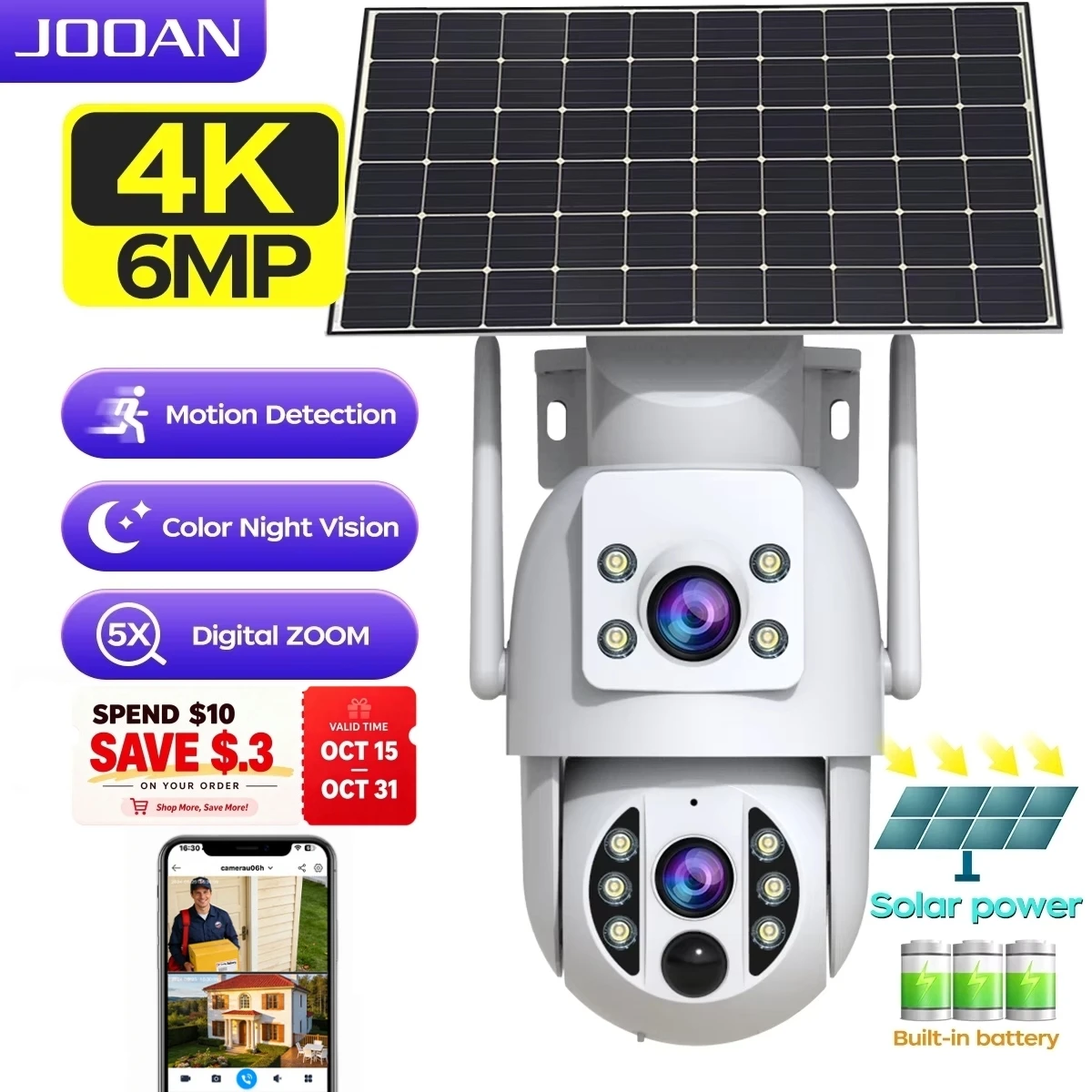
50MP 4K Solar Panel Hunting Camera Infrared Night Vision Monitoring Wildlife Trap Trail Camera Video Photo Recorder Cam

Specs listed reflect seller claims. Sensor arcs, nighttime illumination, and battery longevity vary with weather, foliage, and mounting.
3. Integrated Solar Panel 4K Trap (Advertised 50MP / 4K)
Offered by the Suntek Trail Camera Night Vision Store, this camera listing highlights an integrated top-mounted solar panel and headline capture specs of 50MP photos and 4K video. Having the panel built directly onto the angled top lid aims to simplify field setups by cutting out messy external cables.
- Best suited for: Food plots, field edges, clear-cuts, or logging roads with direct south-facing solar exposure where long-term uninterrupted deployment is desired.
- Field limitations: Top-mounted solar panels are only effective when light reaches the canopy floor. Mounted under deep pine or hemlock cover, charging current drops drastically. Furthermore, tree sap, snow accumulation, and fallen leaves can cover the small solar cell array, requiring regular wiping.
- Verification check: Ask the seller whether an internal lithium backup cell is permanently installed within the chassis, what size SD card class is supported, and whether secondary AA backup batteries can be inserted for winter use.
HC801A-LI 1080P Night Vision Trail Hunting Camera 20MP with 5000mAh Lithium Battery Wild Surveillance Photo Trap

Specs listed reflect seller claims. Sensor arcs, nighttime illumination, and battery longevity vary with weather, foliage, and mounting.
4. HC801A-LI with Dedicated Lithium Battery (Advertised 20MP / 1080P)
The HC801A-LI variant pairs a classic full-sized trail camera chassis with an advertised 5000mAh dedicated lithium rechargeable battery block. With claimed 1080P video and 20MP photo capabilities, its primary selling point is the included or dedicated lithium cell, bypassing the expense of burning through packs of disposable AA batteries.
- Best suited for: Moderate-to-cold climate scouting where lithium chemistry offers steadier operating voltage than conventional alkaline batteries.
- Field limitations: A dedicated lithium battery pack requires pulling the pack or the entire camera to charge via wall power, unless spare proprietary packs are purchased. Ensure the charging interface is sealed against rain before strapping it to timber.
- Verification check: Confirm with the seller whether the 5000mAh lithium cartridge and wall charger are included in the chosen package option, or if the unit is a replacement housing sold without the battery insert.
Field Review Accessories
Checking camera captures directly at the tree saves unnecessary scent contamination and lets you adjust camera angles immediately if your frame only caught animal legs or blowing weeds.
Card Reader for iPhone USB Memory Card Reader Trail Game Camera Viewer SD TF Card Reader Adapter for Camera Samsung Xiaomi iPad

Specs listed reflect seller claims. Sensor arcs, nighttime illumination, and battery longevity vary with weather, foliage, and mounting.
5. Multi-Interface Mobile SD/TF Card Reader
The LIEI Multi-Interface Memory Card Reader ($2.75 reference price) provides standard USB, micro USB, and Lightning/Type-C interfaces to link SD or microSD (TF) cards directly to smartphones and mobile tablets. When walking property lines, pulling the card and viewing pictures on a high-definition phone screen immediately reveals movement patterns without packing a laptop to the stand.
- Field tip: Verify whether your phone or tablet requires an OTG (On-The-Go) setting enabled in system preferences before the external storage directory displays in your mobile file browser.
Feature Comparison of Stated Listing Properties
| Model / Listing | Stated Resolution | Stated Flash / Night Vision | Stated Power Method | Reference Price |
|---|---|---|---|---|
| BolyGuard SG520-Plus | 4K Video / 48MP Photo | 940nm Black IR & White LED | Solar Ready (Specific pack unverified) | $84.53 |
| MiNi301 Compact | 1080P Video / 20MP Photo | Night Vision (Wavelength not verified) | Battery compartment (Type unverified) | $28.04 |
| 50MP Solar Panel Trap | 4K Video / 50MP Photo | Infrared Night Vision | Integrated Solar Panel | $44.48 |
| HC801A-LI | 1080P Video / 20MP Photo | Night Vision | 5000mAh Lithium Battery Pack | $57.66 |
| LIEI Card Reader Adapter | N/A (Card accessory) | N/A | Host device powered (USB / Phone) | $2.75 |
Note: Data points reflect seller listing claims captured in October 2026. Exact componentry, internal sensors, and performance metrics are unverified independent of factory documentation.
Field Setup and Mounting Advice
Even a top-tier game camera will record empty frames or washed-out images if slapped carelessly against a trunk. Implement these field practices on your lease:
- Mind the Sun Path: Mount cameras facing North or slightly North-East whenever possible. An East- or West-facing lens looks straight into rising or setting sunlight, triggering false PIR events from shifting heat signatures and blinding the sensor with lens flare.
- Height and Tilt: Fasten the housing roughly belt-high (3 to 4 feet off the ground) for whitetail deer or medium game. Aim slightly downward to catch the animal's vitals and head without shooting over their backs when they walk close to the base.
- Clear the Trigger Zone: Trim limbs, tall grass, and weeds for at least 15 feet directly in front of the PIR sensor lens. On sunny, windy afternoons, warm vegetation swaying in front of the passive infrared sensor will rapidly fill your memory card with blank clips.
- Check Gaskets and Latches: Before leaving a setup, wipe the perimeter rubber sealing gasket clean of dirt, bark grit, and spider webs. A pinched gasket allows rain and morning dew to seep into the battery bay, causing internal corrosion.
Pre-Purchase Verification Checklist
Before placing an order for imported or marketplace trail cameras, confirm the following items with the seller or product documentation:
- Card Format and Maximum Capacity: Does the camera take standard full-sized SD cards or microSD (TF) cards? What is the upper storage limit (e.g., 32GB, 64GB, or 128GB) and format type (FAT32 vs. exFAT)?
- Power Inclusions: Does the price include the required battery tray, the advertised lithium pack (as in the HC801A-LI), or the solar panel kit? Verify whether standard AA batteries are needed separately.
- Mounting Hardware: Confirm whether an adjustable tree strap, bracket, or 1/4"-20 threaded tree screw is supplied in the box.
- Return Coverage and Shipping: Check whether delivery covers your specific shipping address, and review the seller's return window in the event the optical sensor or night array arrives damaged.
Evaluation is based on published specifications and seller listings. No physical or hands-on testing was conducted; unlisted specifications may still be available from the seller.